How Long Does a Roof Last in North Carolina? Lifespans for Greensboro Homes
Published May 15, 2026
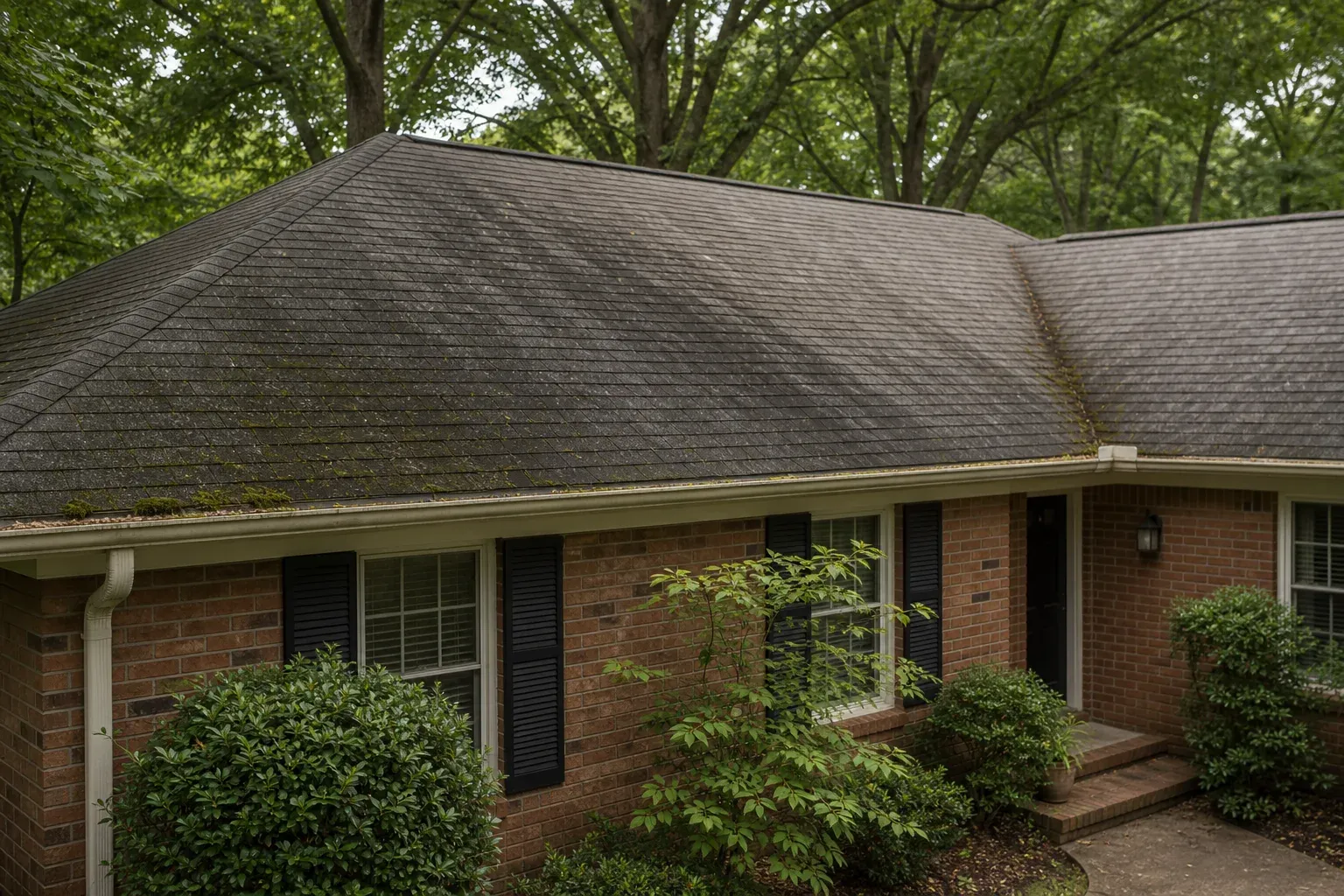
A roof’s expected lifespan isn’t just about the material — it’s about what that material has to deal with. In the Piedmont Triad, your roof faces hot, humid summers, an active spring severe weather season, occasional ice storms, and year-round moisture that’s higher than many other parts of the country. Here’s what realistic roof life looks like in Greensboro.
Realistic lifespans in the Piedmont Triad
| Material | Rated lifespan | Realistic lifespan in Greensboro area |
|---|---|---|
| 3-tab asphalt shingles | 20–25 years | 15–20 years |
| Architectural shingles | 25–30 years | 20–25 years |
| Impact-resistant shingles | 30+ years | 22–30 years |
| Standing seam metal | 40–70 years | 40–60 years |
| Exposed-fastener metal | 30–40 years | 25–35 years |
| Flat membrane (TPO/EPDM) | 20–30 years | 15–25 years |
The gap between rated and actual lifespans for asphalt products is real — but less dramatic here than in extreme climates like the desert Southwest. NC’s moderate temperatures are kinder to shingles than desert heat and UV, but the humidity, storm activity, and moisture cycles take their own toll.
The NC climate factors that age roofs
Active severe weather season
The Piedmont Triad sees significant severe weather from March through May, and again during late summer when tropical systems can push inland from the coast. Hail impact causes immediate granule loss on asphalt shingles — each granule that gets knocked off is one less bit of UV protection, accelerating the underlying asphalt’s degradation. Multiple hail events over a roof’s life can shorten actual lifespan significantly compared to a roof in a hail-free location.
Humidity and biological growth
North Carolina’s humid subtropical climate means roofs stay wet longer after rain, dew forms more frequently, and biological growth conditions are favorable for much of the year. Algae (which causes the dark streaks you often see on shingles) is mostly cosmetic early on, but the moisture it holds against the shingle surface contributes to granule loss and wear over time. Moss is a more serious concern — it holds water against shingles, can lift shingle edges, and contributes to faster aging. Both are more prevalent in Greensboro than in drier climates.
North-facing slopes and areas shaded by trees are most susceptible. Algae-resistant shingles (containing copper or zinc granules) significantly reduce growth and are worth the modest cost upgrade for most Greensboro installations.
Heat cycling and seasonal extremes
Greensboro’s temperatures range from below-freezing winter lows to summer highs well into the 90s°F — a swing of 100°F or more between seasonal extremes. This daily and seasonal temperature cycling causes roofing materials to expand and contract repeatedly, stressing adhesives, seals, and the shingle material itself over thousands of cycles.
Attic ventilation
This is often overlooked but matters significantly in NC’s climate. A poorly ventilated attic traps both heat (in summer) and moisture (year-round). Excessive attic heat accelerates shingle aging from below; trapped moisture contributes to wood rot and mold in the decking and rafters. Proper ridge-and-soffit ventilation that allows air to flow continuously through the attic is one of the best investments you can make when installing a new roof in Greensboro.
Signs your roof is nearing end of life
These are worth knowing from the ground:
- Dark streaks running down slopes — algae growth, usually cosmetic unless widespread and longstanding
- Green patches on shingles — moss, which actively holds moisture and can cause physical damage
- Significant granule accumulation in gutters or downspout splash zones after rain
- Curling or cupping at shingle edges — advanced wear or heat damage
- Missing or displaced shingles in multiple locations
- Multiple leak spots appearing over different seasons — a systemic failure, not an isolated problem
- Roof age near or past the ranges in the table above
When to call a roofer
If your Greensboro-area roof is 15+ years old and you haven’t had it professionally inspected recently, that’s the most useful next step. A free estimate visit will tell you honestly how much life is left, what maintenance might extend it, and what replacement would cost when the time comes. Call (743) 229-7664 and we’ll give you a straight assessment — no pressure.