How Long Should Your Roof Actually Last in Greensboro?
Published May 10, 2026
How long a roof lasts in Greensboro depends heavily on the material and on how well it holds up against the Piedmont’s particular combination of humid summers, severe spring storms, and the occasional heavy rain from a tropical system moving inland. Here’s a realistic look at what to expect by material, along with the signs that your roof is nearing the end of its useful life.
Typical roof lifespans in the Piedmont Triad
| Material | Typical lifespan | Notes |
|---|---|---|
| 3-tab asphalt shingles | 15–18 years | Least expensive, most vulnerable to wind and algae staining |
| Architectural asphalt shingles | 20–25 years | The most common choice for Piedmont homes |
| Metal roofing | 40–60 years | Best resistance to hail, wind, and algae growth |
| TPO/EPDM membrane (low-slope) | 15–25 years | Common on additions, porches, and flat sections |
What shortens roof life in Greensboro’s climate
Humidity and algae growth
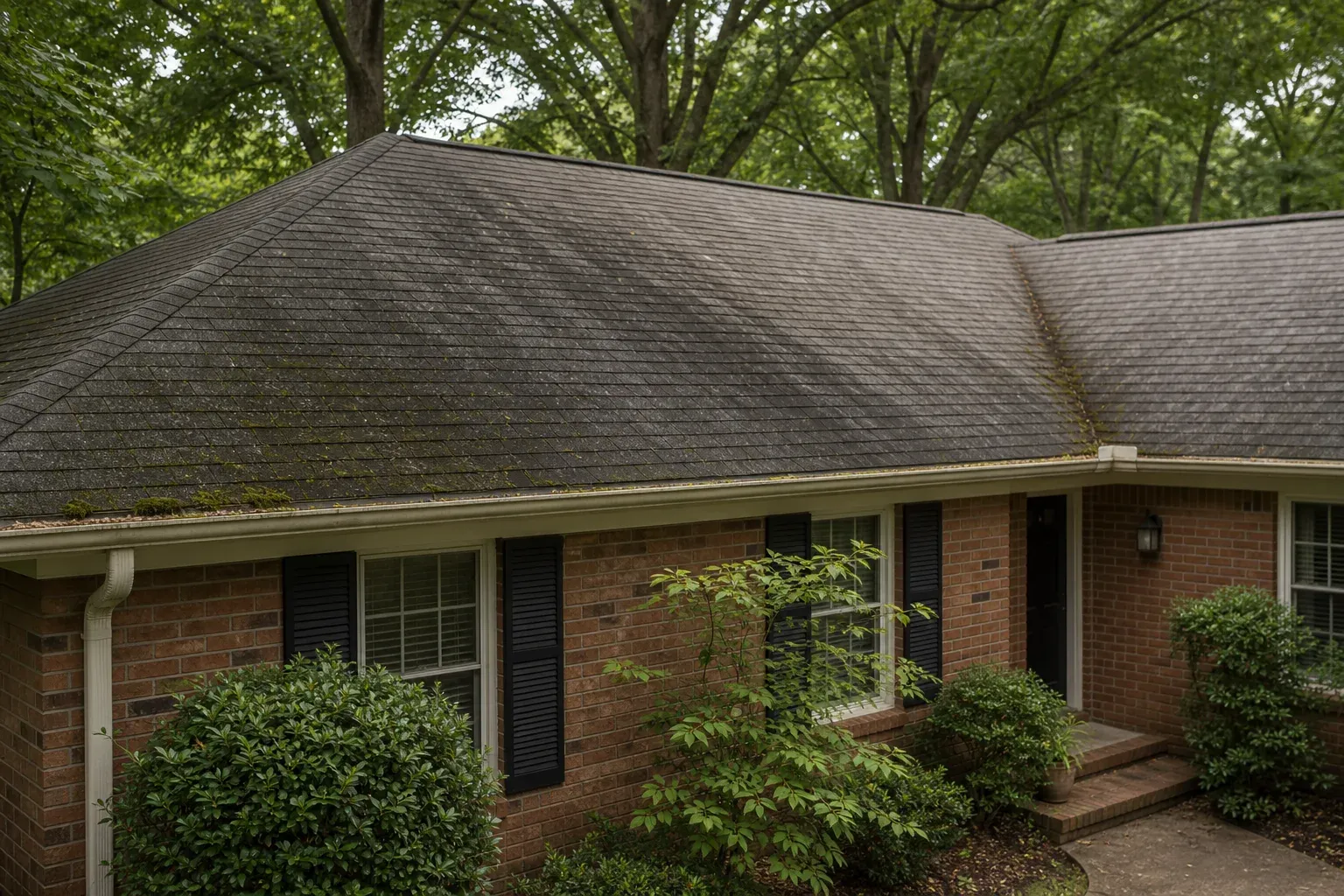
The Piedmont’s warm, humid summers are ideal conditions for algae and moss to take hold on asphalt shingles, especially on north-facing slopes that stay shaded and damp longer after rain. Beyond the dark streaking, trapped moisture under algae and moss growth can accelerate granule loss and shorten the shingle’s effective life.
Severe storms
Greensboro sees frequent spring and summer thunderstorms, some producing hail and damaging straight-line wind. Even storms that don’t cause an immediate leak can knock loose granules or lift shingle edges slightly, both of which speed up long-term wear even if the damage isn’t obvious right away.
Fallen limbs and tree debris
The Piedmont’s dense tree canopy means limbs and debris regularly land on roofs during storms. Repeated minor impacts — even ones that don’t puncture the roof — can bruise shingles and shorten their remaining service life.
Attic ventilation
Poor ridge and soffit ventilation traps both heat and humidity in the attic. In a climate like Greensboro’s, that combination bakes shingles from underneath during the summer and can allow condensation to form during cooler, damp stretches — both of which shorten shingle life and can lead to mold or decking issues in the attic.
Signs your roof is reaching the end of its life
- Shingles that are curling, cupping, or missing granules across large sections
- Dark streaking or visible moss patches, especially on shaded slopes
- Granules collecting heavily in gutters and downspouts
- Missing or displaced shingles in more than one area
- Daylight visible through the roof decking from inside the attic
- Interior ceiling stains or musty attic odors
If you’re seeing more than one or two of these signs, it’s worth getting a free professional assessment rather than waiting for an active leak. Call (743) 229-7664 and we’ll give you an honest read on how much life your roof has left.